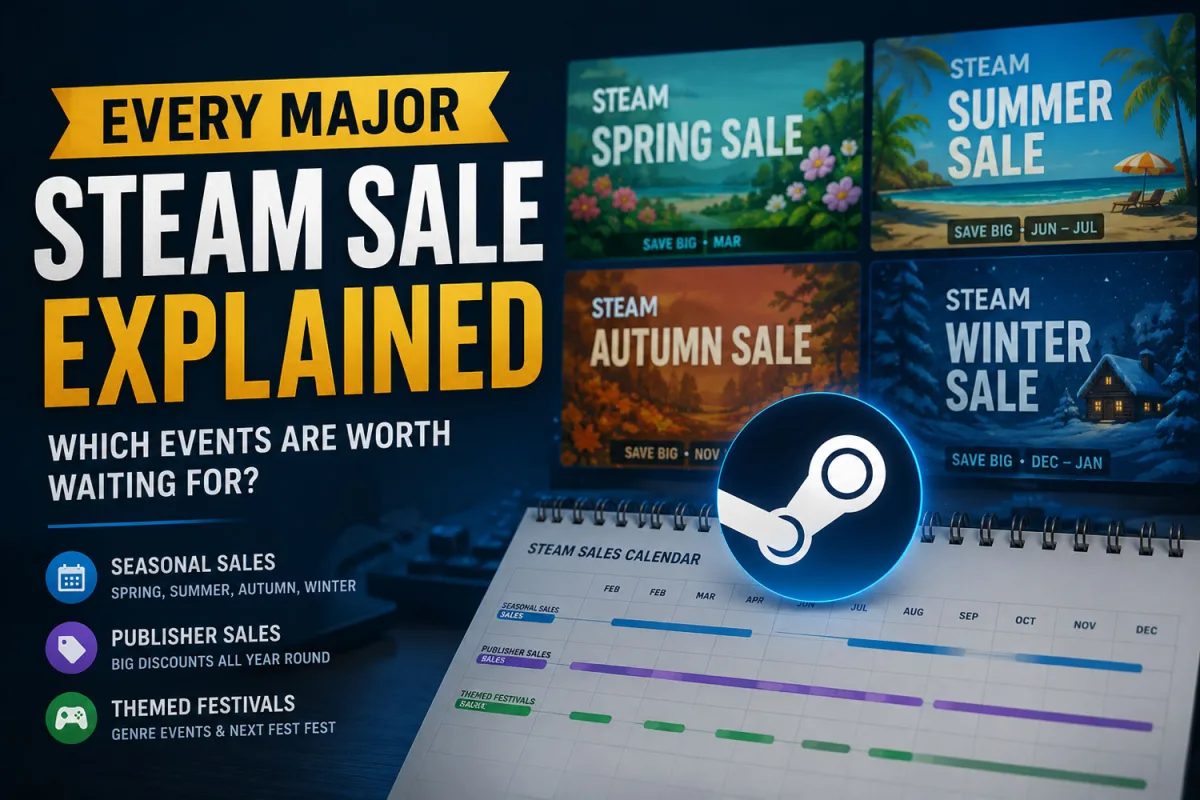
If you've ever looked at a Steam price and wondered, "Should I buy this now or wait?", you're asking the right question. Every Major Steam Sale Explained is more than a list of dates. It's about understanding which events consistently deliver the biggest savings and which ones are better suited for specific types of games.
Steam hosts dozens of promotions every year, but only a handful truly matter for most players. Knowing how they differ can save you money without forcing you to wait months for a discount that never comes.
Why Steam Runs So Many Sales
Steam doesn't rely on just four major events each year. Instead, Valve mixes seasonal sales with publisher promotions, franchise anniversaries, genre festivals, and limited-time events. That means discounts appear almost every week, even if they aren't advertised as widely as the Summer or Winter Sale.
This approach benefits both players and developers. Smaller studios can gain visibility during themed events, while larger publishers can promote entire franchises whenever they choose. For buyers, it creates plenty of chances to save without waiting for the next massive sale.
A common mistake I notice is assuming every Steam sale offers identical prices. That's rarely true. While many games repeat their best discount during multiple events, others receive deeper cuts only during certain promotions or after they've been on the market for a longer period.
If you're tracking a recently released game, patience often pays off. Older games, on the other hand, may already be close to their lowest historical prices regardless of which sale is happening.
The smartest Steam buyers don't wait for every sale. They wait for the right sale.
The Four Seasonal Steam Sales
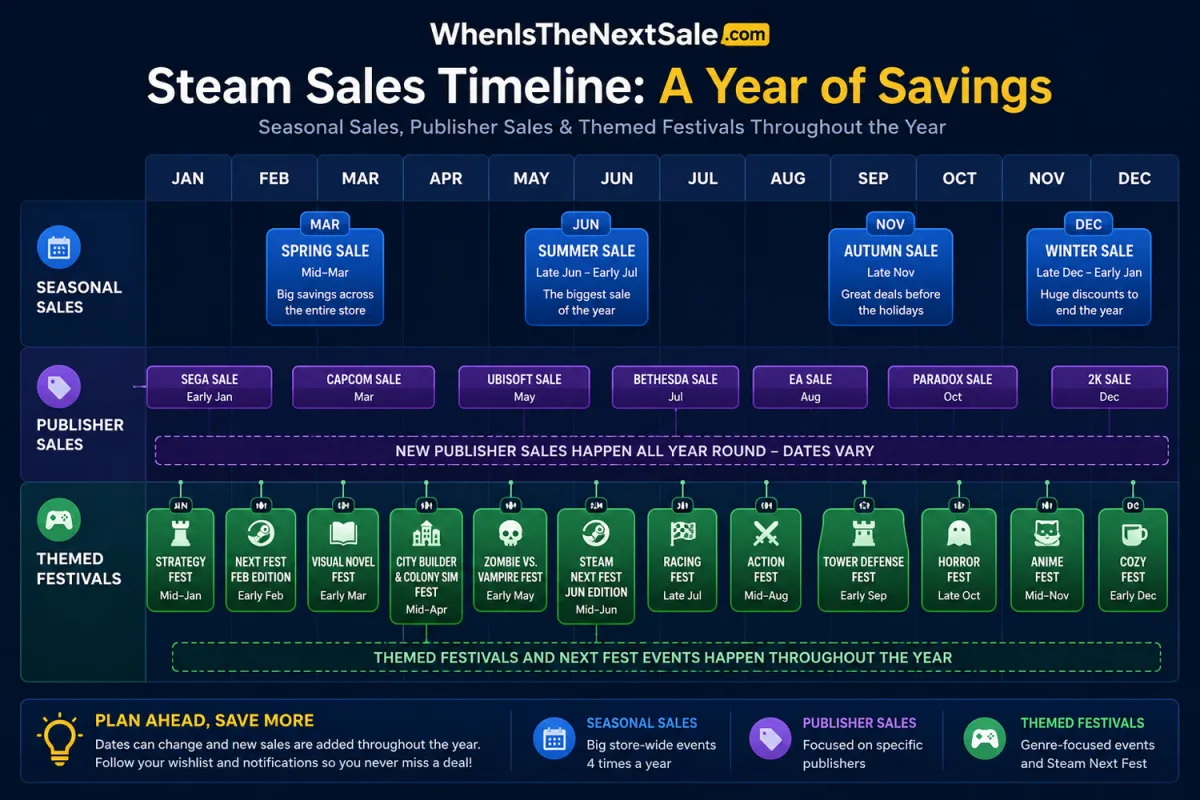
If you only remember four Steam events each year, make them these. The Spring, Summer, Autumn, and Winter Sales are Steam's flagship promotions, attracting thousands of discounted games across nearly every genre.
Although all four cover most of the Steam catalog, they are not identical. Timing, publisher participation, and your own buying habits all influence which event offers the best value.
Steam Spring Sale Starts the Discount Season
The Spring Sale replaced Steam's older Spring Cleaning event and has quickly become one of the platform's biggest annual promotions. It usually arrives in March, making it the first major opportunity of the year to pick up discounted games after the holiday season.
The discounts often mirror those seen later in the year for older titles, although newly released games may only receive modest reductions. If you've been waiting since January to expand your library, this is usually your first worthwhile shopping opportunity.
In my experience, the Spring Sale is particularly useful if you skipped the Winter Sale or recently built a new gaming PC. You don't have to wait until summer to find quality deals.
Don't expect every blockbuster release from the previous few months to receive a dramatic price cut. Publishers tend to protect newer games until they've been available for longer.
A better strategy is to focus on games that are at least six to twelve months old. Those titles are much more likely to receive meaningful discounts while still feeling fresh enough to enjoy.
Buying tip
Before the Spring Sale begins, clean up your Steam Wishlist. Removing games you no longer plan to buy makes it much easier to spot the discounts that actually matter once hundreds of offers go live.
Steam Summer Sale Is the Event Most Players Wait For
Ask almost any PC gamer to name a Steam sale and they'll probably mention the Summer Sale first. There's a good reason for that. It's one of Steam's oldest traditions and consistently features thousands of discounts across AAA games, indie hits, downloadable content, soundtracks, and software.
For many publishers, this is one of the biggest sales periods of the entire year. That often translates into broad participation and some of the most attractive discounts you'll see outside the Winter Sale.
The Summer Sale is also when many players finally purchase games they've been watching for months. If a title has already seen one or two discounts since launch, this event often brings another opportunity to buy at the same price or occasionally even lower.
That said, don't assume every deal is historically the best. A quick look at price history can reveal whether today's offer has appeared several times before or whether it's genuinely worth grabbing while it's available.
If your budget is limited, consider deciding how much you're willing to spend before the sale begins. Steam makes impulse buying very easy, and a shopping cart filled with "good deals" can quickly become far more expensive than you planned.
A simple wishlist and a spending limit usually beat browsing hundreds of discounted games without a plan.
Steam Autumn Sale Is Perfect for Planning Holiday Purchases
he Steam Autumn Sale usually arrives in late November, just before the busiest shopping season of the year. It often overlaps with Black Friday promotions, making it one of the most anticipated events for players who have waited all year to build a wishlist.
Many publishers treat the Autumn Sale as a preview of the Winter Sale. You'll often see excellent discounts on older games, complete editions, and large franchise bundles. If you're buying gifts or stocking up for the holidays, this is an excellent time to shop.
One thing I've seen work well is buying games you know you'll play over the next few weeks instead of purchasing everything because the discounts look tempting. Steam's refund policy helps if you change your mind, but filling your library with games you'll never install isn't really saving money.
Publisher bundles deserve extra attention during this sale. If you already own part of a collection, Steam often adjusts the price so you only pay for the games you're missing.
Steam Winter Sale Delivers the Biggest Selection
For many players, the Winter Sale is the highlight of the Steam calendar. Running in late December through early January, it combines huge publisher participation with holiday shopping and plenty of time off for gaming.
Almost every major publisher joins the event. Thousands of games receive discounts, from brand-new indie releases to classics that have been popular for years. If your wishlist is packed, chances are most of it will be discounted during this event.
The Winter Sale is also a great opportunity to pick up downloadable content, expansion packs, and complete editions. Publishers often bundle base games with every expansion at prices that are much lower than buying each piece separately.
That doesn't automatically make every purchase a bargain. A complete edition only makes sense if you actually plan to play the additional content. Otherwise, buying the standard edition may still be the smarter choice.
Publisher Sales Can Beat Seasonal Events
Many people focus only on Steam's seasonal promotions, but publisher sales are often just as valuable. Companies like Capcom, Ubisoft, Bethesda, Paradox Interactive, EA, and SEGA regularly discount nearly their entire catalogs outside the major seasonal calendar.
These events usually celebrate anniversaries, franchise milestones, or new releases. When a sequel launches, older entries frequently receive some of their biggest discounts to attract new players.
If you're waiting for a specific series, following publisher events can save you weeks or even months. A Resident Evil fan doesn't necessarily need to wait for the Summer Sale if Capcom launches a dedicated publisher promotion first.
This is also where your Steam Wishlist becomes incredibly useful. Steam automatically notifies you when wishlisted games go on sale, regardless of whether the discount comes from a seasonal event or a publisher promotion.
If you only check Steam during the Summer and Winter Sales, you're likely missing some excellent deals throughout the rest of the year.
Genre Festivals Often Hide Excellent Deals
Steam has expanded far beyond traditional sales. Throughout the year, Valve hosts themed festivals focused on specific genres like strategy, city builders, visual novels, racing games, roguelikes, farming simulators, and many others.
These events may not feature the entire Steam catalog, but they're incredibly useful if you mainly play one type of game. Smaller developers often participate with discounts that match or even exceed those offered during larger sales.
Genre festivals also give developers a chance to release demos. Trying a game before buying can save far more money than chasing an extra five percent discount during a bigger sale.
In my experience, players who enjoy indie games should pay close attention to these themed events. They often introduce hidden gems that receive far less attention during Steam's largest promotions.
When Waiting Makes Sense and When It Doesn't
Waiting isn't always the smartest strategy. If a game already matches its historical low price and you're ready to play it today, delaying your purchase for another seasonal sale may not save you anything.
On the other hand, buying a full-price game only a few weeks before a major Steam event is often unnecessary. Unless you plan to play it immediately, waiting can sometimes save a significant amount.
The best Steam deal isn't always the cheapest price. It's the one that lets you play when the value makes sense for you.
One habit that's helped me avoid unnecessary purchases is checking three things before clicking Buy: the game's release date, its recent discount history, and how soon the next major Steam event begins. Those three factors usually provide enough information to make a confident decision.
While building WhenIsTheNextSale, I've noticed that many popular games repeat similar discounts several times each year. Knowing that pattern makes it much easier to decide whether today's deal is worth taking.
If you're trying to stretch a gaming budget over the entire year, keeping track of sale patterns is far more useful than chasing every individual discount.
Before the next major Steam event begins, spend a few minutes reviewing your wishlist and removing games you've lost interest in. That small bit of preparation makes every sale easier to navigate and helps you spend your budget on games you'll actually play instead of deals you'll forget about a week later.
FAQ
Which Steam sale usually has the biggest discounts?
Should I wait for the next Steam sale before buying a game?
Do Steam sales always repeat the same discounts?
Are publisher sales better than Steam seasonal sales?
Wrapping Up
Knowing every major Steam sale is only half the battle. The real advantage comes from understanding which events fit the games you actually want to play. Seasonal sales bring huge catalogs and broad participation, publisher promotions target specific franchises, and genre festivals often uncover excellent games that many players overlook.
Once you recognize these patterns, buying games becomes much less about luck and much more about timing. You'll spend less, avoid unnecessary impulse purchases, and build a library you'll actually enjoy instead of one filled with forgotten bargains.
The easiest habit to build is keeping your Steam Wishlist up to date throughout the year. When the next sale arrives, you'll already know which games matter most, and Steam will notify you when they receive discounts.
If you're planning your next purchase, check our Steam sale calendar and upcoming sale predictions before you buy. A few minutes of planning today can easily save you money on your next game while helping you decide whether it's worth buying now or waiting for the next big event.